If you have ever been to a gaming convention, you know the sound. It isn't just noise. It is a physical force, a very specific, thrumming roar that vibrates in your chest. It is the sound of thousands of dice clattering simultaneously against wooden trays and plastic tables. It is the cacophony of friends shouting strategy over the din of commerce. It is the manifestation of sheer, unbridled enthusiasm that only a room full of tabletop gamers can generate.
I was wading through that exact sonic ocean on Friday, November 21st, at PAX Unplugged in Philadelphia. The expo hall was electric, a sprawling maze of cardboard and creativity that felt like home. But amidst the joy, I was on a mission to find something rare and precious. I needed silence.
Well, relative silence.
I was hunting for a quiet corner to speak with Kendrick, the Media Production Manager for Kobold Press. This became a game in and of itself, a stealth mission where the objective was to find a square foot of carpet not currently occupied by a demo of an exploding kitten or a shouting match about resource management. We eventually found a small oasis of calm in the back of the hall, tucked away from the main thoroughfares, to sit down and talk about the game that has effectively taken over my tabletop life.
I am talking, of course, about Tales of the Valiant.
I have been following this system since the very first whisper of an announcement. I sat glued to the Twitch streams when it was just a codename. I backed the Kickstarter the moment it went live, refreshing the page until my pledge went through. Since then, I have been devouring every book as it hit my digital or physical shelf. I am currently impatiently waiting for my hard copy of the Labyrinth Worldbook to arrive so I can finally smell the fresh ink.
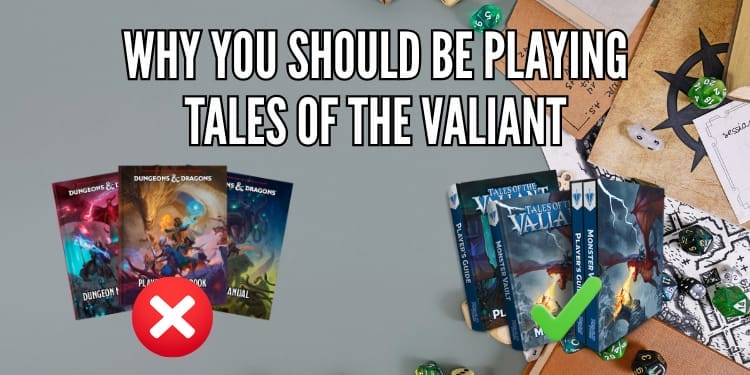
For me, Tales of the Valiant has evolved from a curiosity into my complete 5th Edition source. It has replaced the old books in my bag. But I know what some of you are thinking. You are looking at your shelf of 2014 rulebooks and thinking, "Michael, isn't it just a clone of the game I already play? Why should I learn something new that looks so much like the old?"
After sitting down with Kendrick and really diving into the philosophy behind the game, I am here to tell you that calling it a clone is not just inaccurate. It is a disservice to one of the most exciting, player-focused evolutions in the TTRPG space.
Beyond the "Clone" Label
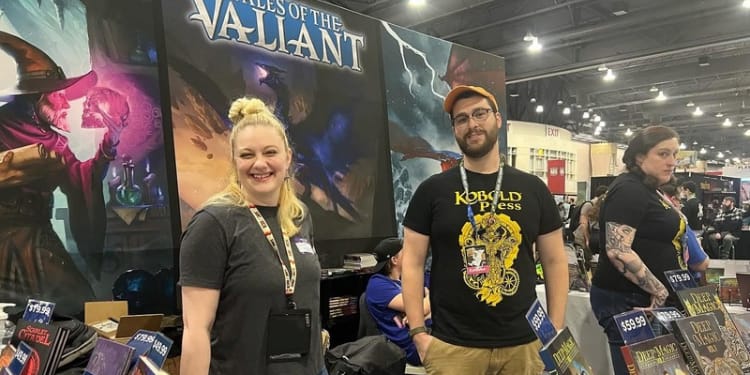
Kobold Press members at their table at PAX Unplugged 2023.
There is a stigma that comes with being a 5th Edition alternative. It implies that you are just the "diet" version of the big brand, or a house-ruled copycat that exists solely because of legal loopholes. It suggests a lack of originality. When I brought this up to Kendrick, they didn't shy away from the comparison. They tackled it head-on, but they reframed it in a way that clicked for me perfectly.
"Just being a D&D 5e clone or just a D&D 5e alternative is a disservice because I think it's taking away from the positive changes that Tales of the Valiant brings to fifth edition 2014," Kendrick told me. "That truly changed the gameplay in such a way where it feels—obviously it doesn't feel wholly different, right? You still got a d20 system, ability modifiers, so on and so forth. But you've got familiar classes that play differently, that feel different. The fiction feels different because of how they play differently."
This resonates with me deeply because I have felt it at the table. When I run a game using Tales of the Valiant, I am not fighting the system to make it tell the story I want. The system is pushing the story forward. In the older version of the game, I often felt like I had to homebrew fixes for sluggish combat or lackluster character options. Here, the fixes are baked into the core design. The monsters in the Monster Vault, for example, aren't just bags of hit points; they have dynamic actions that make combat feel cinematic without me having to invent mechanics on the fly.
The biggest factor here is ownership. For years, Kobold Press was the king of third-party publishers. They made the best monsters (looking at you, Tome of Beasts), the best spells, and the best supplements for someone else's game. But there is a constraint there. When you play in someone else's sandbox, you have to color within the lines they drew, even if those lines are crooked.
Now, those lines are gone.
"Having Tales of the Valiant be our own thing means that any changes we want to make to the system, any additions we want to bring to the system are wholly our own," Kendrick explained. "Obviously inspired by other things, but the system is our own and we can evolve it in whatever way that we see fit."
That freedom allows for innovation that isn't just about adding more power, but about adding more depth. It allows them to fix the foundations rather than just patching the roof.
The Community is Canon
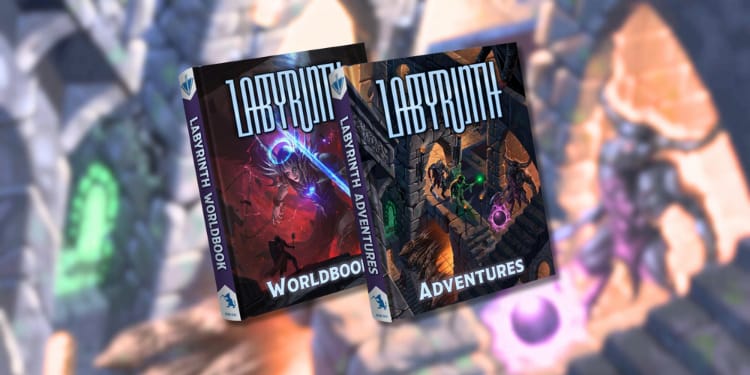
The Labyrinth Worldbook and Adventures were both successfully crowd sourced and player inspired.
One of the things I love about the intersection of gaming and mental health is the sense of belonging. We all want to feel like we are part of something bigger. Usually, in the TTRPG world, that means we are fans looking in from the outside. We consume the lore, we read the novels, we memorize the wiki pages, but we don't touch it. Our home games are "non-canonical" spinoffs that exist only in our heads.
Kobold Press has taken a sledgehammer to that wall with the Labyrinth setting.
The Labyrinth is their meta-setting, a way to connect all worlds through a mysterious maze of portals and pathways. It is brilliant from a structural standpoint because it allows you to hop between genres and settings—high fantasy, gothic horror, weird sci-fi—without breaking immersion. But the real magic is in the "Portal" page and the concept of the "10,000 Worlds."
Kendrick confirmed something that blew my mind during our chat. The community submissions? They are canon.
"Literally any world that is submitted or is homebrew, that's canon," Kendrick said. "It's canon because... the '10,000 Worlds' always meant that anybody who's playing in it could always bring their own world... And so the community portal for people to put their own worlds just felt like a natural extension of the truth we were already saying about the Labyrinth: that this is your setting."
This isn't just marketing speak. It is a validation of creativity. They are actively highlighting community creators in a way I have rarely seen. Kendrick shouted out the "Kobold Creates" partners who have built projects tied to the Labyrinth. They mentioned Taino Tales, which brings indigenous Caribbean mythology to the forefront. They talked about the biological nature-horror of Batty Bards. They even highlighted the hilarious office comedy of Mage Hand High Five, where you play as someone filing paperwork for a cult trying to end the multiverse.
These aren't just fun side projects; they are part of the tapestry of the game. It makes the Tales of the Valiant universe feel alive in a way that a static book never could. It tells you that your table, your story, and your world matter just as much as the official ones written by the pros. It transforms the game from a product you buy into a community you build.
Mechanics with Meaning: Luck and Doom
In Tales of the Valiant, the dice empower players and GMs to create cinematic storytelling moments in every session.
Let’s talk about the crunch, because this is where Tales of the Valiant really shines for me. Specifically, I want to talk about the Luck and Doom system.
In my opinion, this is the single best mechanical addition to the 5e chassis, and it fixes one of the biggest psychological hurdles in gaming: the feeling of wasted time.
In traditional 5e, failure often feels like a dead end. You wait ten minutes for your turn in combat, you roll a 4, you miss, and your turn is over. You accomplished nothing. It is frustrating. It breaks the momentum. It feels bad.In Tales of the Valiant, failure is a resource. When you fail an attack or a save, you gain a Luck point. You can hoard these points (up to 5) and then spend them later to boost a roll or force a reroll.
"Luck cares about making sure that everything that you're doing at least matters in some kind of way, even if you're failing," Kendrick noted. "Your failures build up to success. It feels earned."
From a mental health perspective, I adore this because it reframes failure. It is no longer a stopping point; it is a stepping stone. It keeps you engaged even when the dice betray you, because you know that miss is just loading the gun for a massive success later. Imagine missing three times in a row against a goblin, only to use the Luck you generated to land the killing blow on the dragon an hour later. That narrative arc—from stumbling to soaring—is built right into the math.
On the flip side, we have Doom. This is a currency for Game Masters, giving them a way to ramp up tension without just inflating hit points or fudging dice. Kendrick mentioned that Mike Shea (the Lazy DM himself) wrote extensively on how to use Doom to make boss fights actually feel like boss fights.
Doom allows the GM to trigger special villain abilities or intervene in the narrative at crucial moments. It gives the GM control over pacing and narrative tension that feels fair because it mirrors what the players are doing with Luck. It is a give-and-take economy that makes every roll of the dice feel significant. It turns the GM from a referee into a director, managing the flow of drama rather than just the rules of engagement.
Character Creation Reimagined
Players are given more options for original takes on classic character types in ways that they weren’t afforded before.
We have all been there. You sit down to make a Level 1 character in 2014 5e. You pick a Race, you pick a Class, you pick a Background. Often, it feels like you are just selecting a stat block. You pick "Elf" because you want the Dexterity bonus, not because you care about Elven culture.
Tales of the Valiant splits "Race" into Lineage (your biological traits) and Heritage (your cultural upbringing). Then it adds Background as a third pillar.
It sounds like a small semantic shift, but the roleplay implications are massive. It completely decouples biology from culture, which is not only more inclusive but simply makes for more interesting characters. Kendrick gave me a perfect example during our interview that highlights this flexibility.
"If I go into D&D 2014 and I'm like, 'Cool, I want to make a character. They are a Dwarf Paladin Acolyte.' That doesn't really mean... that can still be a million characters," Kendrick said. "But what is it personally when I go, 'Okay, I'm going to play a Dwarf, Cloud Heritage... Acolyte.' That's very different, because Cloud Heritage specifically tells me that this is a character that was raised in a society that cares about magic... Immediately you have, 'Oh, a Dwarf raised by Elves.'"
Suddenly, you have a story before you have even rolled initiative. You have a dwarf who maybe doesn't know anything about mining but knows a lot about high-altitude weather patterns and arcane theory. You aren't pigeonholed into stereotypes. You can play an Orc raised by Gnomes, or a Halfling who grew up in a militaristic Dragonborn fortress. The mechanics support your backstory rather than contradicting it.
A Masterclass in Accessibility
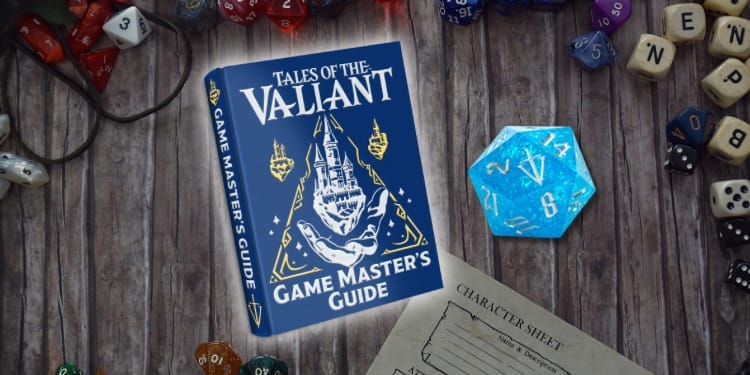
The Game Master’s Guide for Tales of the Valiant offers a wealth of knowledge for all types of tabletop games.
One of the biggest friction points for new Game Masters in traditional systems is the buy-in. I don't just mean money, though that is part of it. I mean the cognitive load. You are told you need the Player's Handbook, the Dungeon Master's Guide, and the Monster Manual just to run a basic session. That is hundreds of pages of reading before you even drop your first goblin.
Tales of the Valiant flips the script on this entirely.
"The core reason for this was that Tales of the Valiant was designed so that you wouldn't need the Game Master's Guide to play it," Kendrick explained. "Everything that you need to know to play the game is in the Player's Guide."
This is a massive shift in philosophy. The Player's Guide isn't just for players; it is the definitive rulebook for the table. It democratizes the rules and it means that everyone at the table, from the person rolling the dice to the person behind the screen, is working from the same foundation. It lowers the barrier to entry significantly.
So, if the Player's Guide has everything, why does the Game Master's Guide exist? Is it useless? Far from it. In fact, it might be the most valuable book Kobold Press has ever printed, regardless of what system you play.
"We wanted to make something that would enhance the game for any Game Master at any level," Kendrick told me. "We want to help make people better Game Masters, not just better Tales of the Valiant Game Masters."
The GM Guide isn't a book of rules; it is a book of wisdom. It teaches you how to pace a session, how to handle social encounters, and how to "fail forward" in a way that keeps the story moving. It is less like a technical manual and more like a mentorship in hardcover form. Even if you never roll a single d20 in the Tales of the Valiant system, the advice in that book will make you a better storyteller. It is a resource for the person, not just the game.
Looking to the Horizon
The future looks bright for what’s to come with upcoming books and expansions.
If you think Kobold Press is resting on their laurels after the core books, you clearly don't know Kobold Press. They are already pushing the system into new territories, ensuring that the game continues to grow and evolve.
Kendrick teased the upcoming Player's Guide 2, and frankly, I am vibrating with excitement. We are getting three new base classes. The Vanguard, the Theurge, and the Witch. The Theurge and Witch are being updated from their original Deep Magic 2 incarnations to be full Tales of the Valiant base classes with subclasses. This expands the magical and martial options significantly, filling niches that standard 5e often leaves empty.
But the thing that really caught my ear was the base building.
"In Player's Guide 2, you get the new rules for building bases and building your home fortresses," Kendrick explained. "It is specifically designed to interact with the fiction in such a way where, yes, it is an added layer to the mechanics... but it is also a fictional thing."
As someone who loves giving my players a place to call home (and then threatening it with dragons), having robust, codified rules for this is a campaign-changer. It anchors the players in the world and gives them something to fight for that isn't just gold pieces or magic items. It turns "adventurers" into "residents." It gives them a stake in the world's survival that goes beyond their own hit points.
And looking even further ahead, I managed to pry a little secret out of Kendrick about what is coming next year. While I can't say much yet, I learned about some stuff coming down the pipe that is going to really excite fans of horror. They are taking inspiration from other RPGs to lean into a "much more fiction-heavy version" of the game we love. If you are a fan of darker, spookier settings, you are going to want to keep your eyes peeled.
Why You Should Switch
I have played a lot of TTRPGs. I have shelves buckling under the weight of rulebooks and played the indie darlings and the corporate behemoths. But Tales of the Valiant has earned its place at the center of my table.
It isn't just because the mechanics are tighter (though they are). It isn't just because the monsters are better designed (though they absolutely are). It is because the game respects your time, your creativity, and your failures.
It turns the "oops" moments into "aha!" moments with the Luck system, ensuring that a bad night of rolling doesn't ruin your fun. It invites you to build the world alongside the creators with the Labyrinth, validating your homebrew as part of the greater canon. It gives you the tools to tell stories that feel specific, personal, and heroic, with character creation that prioritizes narrative depth over statistical optimization.
So, if you are still clinging to your 2014 books, wondering if the grass is greener on the other side... let me tell you. The grass isn't just greener. It is full of adventure, danger, and a community that wants you there using a system that has learned from the past decade of gaming and improved upon it in every meaningful way.
Get into the Labyrinth. I'll see you there.
If you could submit one world to the 10,000 Worlds of the Labyrinth, what would it be? Let me know in the comments below!
Hey fellow nerds! Before you dive back into that gaming session or start your next binge-watch, here’s the deal with Couch Soup: we’re a completely independent pop culture site run by genuine fans who get just as hyped as you do about the latest games, comics, movies, and TV shows. No corporate overlords, no AI-generated content, just real people who know their Metroid from their Mass Effect.
Unlike the big corporate sites, we don’t chase clicks or stir up drama. Sure, we might have some hot takes (looking at you, controversial season finale), but they come from a place of genuine passion and respect for the creators and fandoms we cover.
Want to support what we do and join what we think is the coolest community of pop culture enthusiasts on the internet? Check out our supporter tiers – each packed with perks that’ll level up your fandom experience. Every contribution helps keep us independent and lets us keep nerding out with you!
Thanks for being part of our quest – now, back to our regularly scheduled geekery!
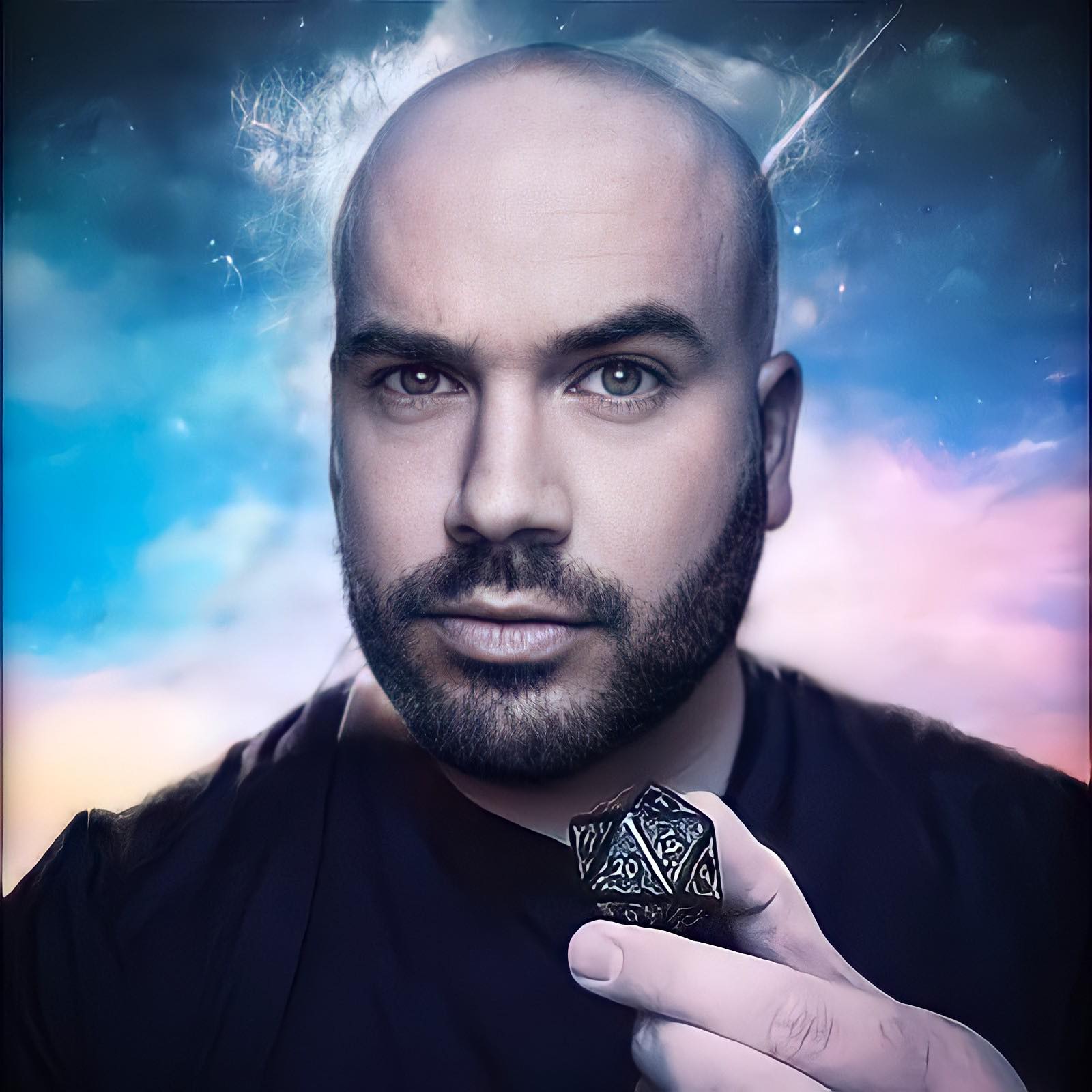
Michael is an actor, writer, and a content creator, specializing in theatre and theme parks. He's currently the host of the YouTube channel Backstage Kingdom which deep dives into live entertainment in theme parks around the world. Michael also is a DM for the TTRPG actual-play channel "To Be Diced Adventures" on Twitch and YouTube.
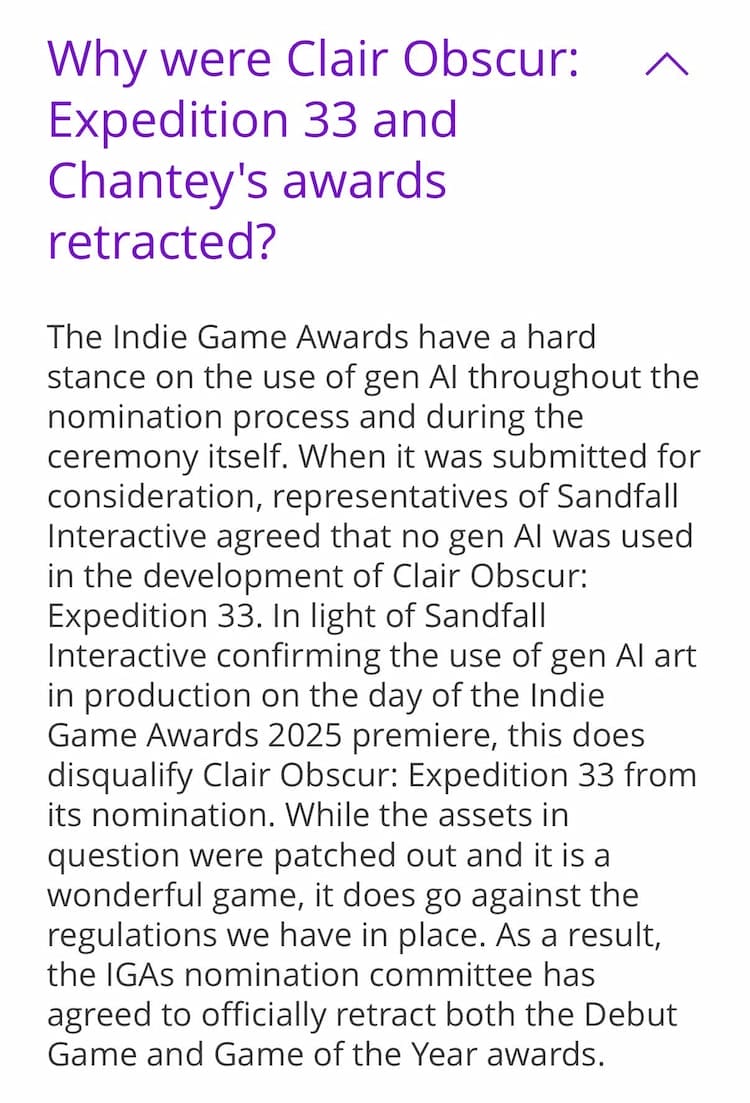
Honestly, I love the game, but I get it. Gen AI sucks and rules be rules. As stated on https://www.indiegameawards.gg/faq, Clair Obscur: Expedition 33 has been disqualified from their accolades in the Indie Game Awards because of their confirmed usage of Gen AI art. Although the art has now been patched, it's against the Indie […]
The official trailer for Stranger Things 5, Volume 2, is here, and I have a mix of emotions. Steve and Dustin, what do you mean, "If you die, I die"?!? Also, Vecna really knows how to be a dramatic and over-the-top antic queen. I am loving the strong girl power vibes, while also being equally […]
The wait for Season 2 is almost over! We got our first official look at Toph and Aang learning to bend other elements. So excited to see my girl on screen! Hoping they do her character justice. Season 2 comes to Netflix in 2026, will you be tuning in?
Tales of the Valiant is the 5e evolution we’ve been waiting for. With the game-changing Luck system and a setting where your homebrew is canon, discover why it's finally time to shelve your 2014 books.
After a bit of a hiatus, we’ve got the second installment of Friendship Enders and we’re focusing on part two of the relationship-ending trifecta – Mario Party. Grab your controllers, get those thumbs ready cause it’s time to party.
Pokémon GO is bringing Hyper Training into the game alongside the new Ancients Recovered event, but what is Hyper Training, and why should you care? Join Tom as he tells you all you need to know about Hyper Training and the new Pokémon GO additions.












I wish adulting weren't so hard. I would totally be down to play this.