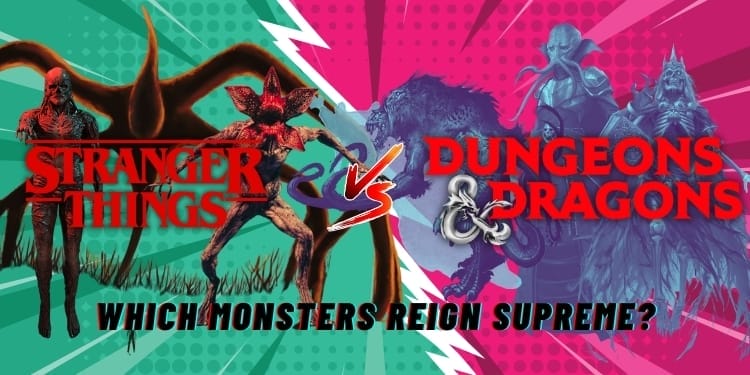
The kids of Hawkins love naming their nightmares after Dungeons & Dragons legends, but do the Upside Down’s monsters actually live up to the tabletop hype? I’m dusting off my Monster Manual to pit the show’s villains against their original counterparts in an all out slobberknocker of lore and stats. From the Demogorgon’s brute strength to Vecna’s god-tier magic, we’re about to find out if the show’s Big Bads are a Total Party Kill or just a low-level encounter.
If you know me, you know that two of my biggest loves in this world are getting lost in a chaotic tabletop RPG session and binge-watching 80s nostalgia horror. Stranger Things has been a gift to nerds like me since it dropped in 2016. It didn’t just give us a gripping sci-fi mystery; it brought Dungeons & Dragons into the mainstream cultural conversation in a way we hadn’t seen before.
But as a longtime Dungeon Master, I’ve always had a bone to pick with the kids from Hawkins. They have a habit of naming the extradimensional horrors threatening their town after legendary D&D monsters. It’s a coping mechanism, sure, but it also leads to some confusion. Is the Demogorgon from the Upside Down anything like the Prince of Demons from the Monster Manual? Could Eleven take down a real Mind Flayer?
Today, I’m putting on my DM robe and stepping into the ring. We’re going to pit the Stranger Things villains against their tabletop namesakes in a no-holds-barred cage match. We’ll look at their stats, their lore, and their power levels to see who’s the true Big Bad. Let’s roll for initiative!
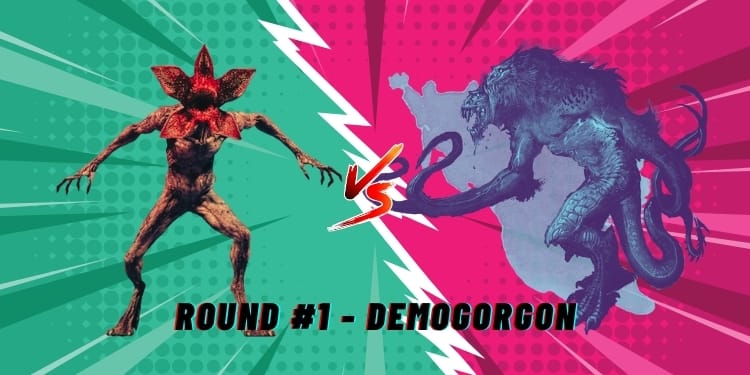
A scary animal versus the Prince of Demons. This doesn't look like a fair fight
The Demogorgon: Beast vs. Prince
Let’s start where it all began. In Season 1, Mike and the gang dubbed the petal-faced nightmare hunting Will Byers “The Demogorgon.” It was terrifying, relentless, and arguably the most iconic creature design of the last decade. But does it hold a candle to the original?
The Hawkins Contender
The Stranger Things Demogorgon is a predator. It’s animalistic, driven by the scent of blood, and operates largely on instinct. It possesses immense physical strength, durability that shrugs off small arms fire, and the ability to travel between dimensions. It’s scary because it’s primal—like the shark in Jaws or the xenomorph in Alien. You can’t reason with it; you can only run.
The problem? It’s just a beast (at least in Season 1).
We saw Hopper go toe-to-toe with one (with a sword, which was awesome), and we’ve seen them taken down by fire and telekinesis. They’re dangerous, sure, but they’re mortal foot soldiers in a larger war.
The D&D Legend
In Dungeons & Dragons, Demogorgon isn't a species—he's a singular entity. He's the Prince of Demons, a title he earned by being the absolute worst thing in the Abyss. Standing 18 feet tall with a reptilian body, tentacled arms, and two baboon heads named Aameul and Hethradiah, he's nightmare fuel personified.
This guy doesn't just bite you. He drives you insane by looking at you. His gaze can hypnotize, rot your flesh, or turn you against your friends. He commands armies of demons and rivals other demon lords like Orcus. If the Stranger Things Demogorgon is a shark, the D&D Demogorgon is a hurricane made of hate and madness.
The Verdict
This isn't even a contest. The D&D Demogorgon is a god-tier threat that requires a party of level 20 adventurers to even stand a chance. The Hawkins version is a scary animal that a few teenagers with baseball bats and hairspray can inconvenience.
Winner: D&D Demogorgon. He'd wipe the floor with the entire Upside Down ecosystem before breakfast.
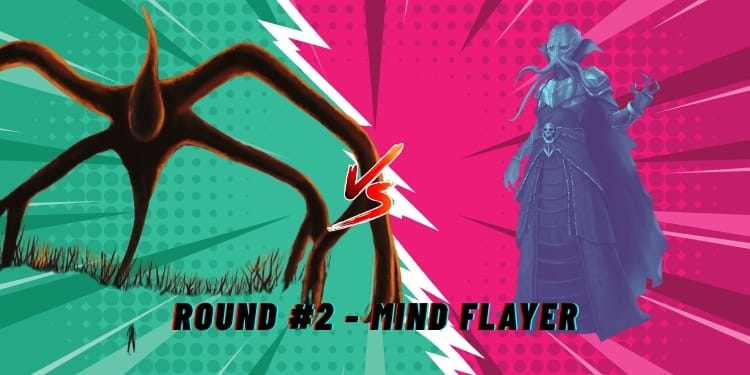
Cosmic horror vs. a guy who really likes brains. Size matters in this matchup
The Mind Flayer: Shadow Monster vs. Brain Eaters
Seasons 2 and 3 introduced us to a threat that was less physical and more existential. The Mind Flayer—or the Shadow Monster—represented a hive mind intelligence bent on conquering dimensions. It felt ancient and unknowable. But how does it stack up against the tentacle-faced slavers of the Underdark?
The Hawkins Contender
The show's Mind Flayer is massive—a towering storm of shadows that can possess thousands of hosts simultaneously. In Season 3, it built a physical proxy body out of melted rats and people (gross), showcasing its terrifying adaptability. Its greatest strength is its hive mind: hurt one part of it, and the whole thing knows. It's a conqueror that acts like a virus, spreading and corrupting everything it touches.
The D&D Legend
In tabletop lore, Mind Flayers (or Illithids) are alien conquerors who enslave entire races and feast on brains to sustain themselves. They're terrifying because they're smart—scary smart. They wield psionic powers that can blast your mind into jelly or dominate your will entirely.
However, an individual Mind Flayer is just a monster. The real threat comes from their Elder Brain—a giant brain floating in a brine pool that directs the entire colony. The Elder Brain is a powerful psionic hub, but it’s physically immobile and relies on its minions for protection.
The Verdict
This one is trickier. A single D&D Mind Flayer is smarter and more dangerous than a single Demodog, but the Stranger Things Mind Flayer is a cosmic entity. It’s more comparable to a D&D god or a Great Old One warlock patron than a standard monster.
While Illithids are terrifying, they’re mortal. You can stab a Mind Flayer. You can fireball an Elder Brain. The Shadow Monster is a cloud of sentient particles and psychic energy that spans dimensions.
In a one-on-one fight, the sheer scale of the Hawkins Mind Flayer wins. It’s not just a monster—it’s an environment.
Winner: Stranger Things Mind Flayer. It’s simply too big to fail.
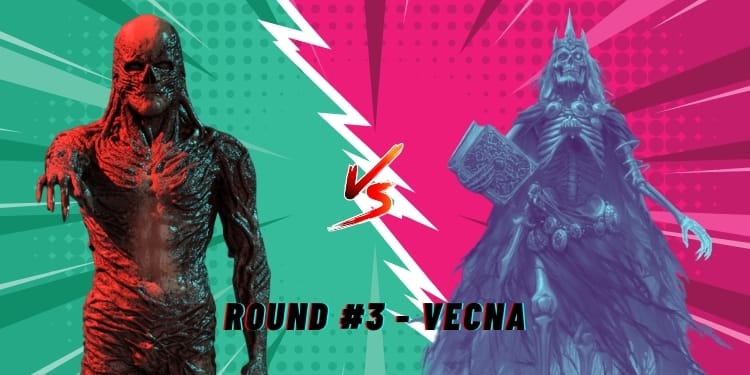
A psychic serial killer takes on the God of Secrets. Henry might be out of his depth.
Vecna: The Sorcerer vs. The Lich God
Now we get to the main event. Season 4 introduced us to the architect of all our pain: Vecna.
Revealed to be Henry Creel, or One, he’s the dark mirror to Eleven. He’s cruel, calculating, and enjoys breaking his victims mentally before he snaps their bones. He’s the best villain the show has had, but he shares his name with perhaps the most famous villain in D&D history.
The Hawkins Contender
Henry Creel is a powerhouse. He has high-level telekinesis, remote viewing, and the ability to invade minds across dimensions. He attacks his victims through their trauma, which is a terrifyingly brilliant tactic.
He’s resilient, too—surviving Molotovs and shotgun blasts.
He also sees himself as a god, wanting to reshape the world into something “beautiful” (by which he means dead and rotting). He’s the general commanding the Mind Flayer and the Demogorgons. He’s the man behind the curtain.
The D&D Legend
In Dungeons & Dragons, Vecna started as a human wizard so terrified of death that he became a lich—an undead mage who hid his soul in a phylactery. But he didn’t stop there. He grew so powerful that he ascended to godhood. He is the God of Secrets.
Vecna is missing his left hand and left eye, which are now artifacts of immense power in the game. If you equip the Hand of Vecna, you gain superpowers, but first you have to cut off your own hand to attach it. That’s the level of metal we’re dealing with here.
Vecna can cast spells that alter reality, stop time, or kill you with a word. He wrote the Book of Vile Darkness. He is the ultimate end-game boss.
The Verdict
I love Henry Creel. Jamie Campbell Bower gave a chilling performance that haunts my dreams. But we’re comparing a very strong psychic human to a literal god of magic.
The D&D Vecna has had thousands of years to perfect his craft. He’s survived betrayals, deicide attempts, and being erased from existence. Henry Creel struggled against a few teenagers with Walkmans and a sword.
If D&D Vecna showed up in Hawkins, he wouldn’t need to open gates slowly—he would just snap his skeletal fingers and rewrite reality. Henry is an apprentice compared to the Whispered One.
Winner: D&D Vecna. It’s not just a victory; it’s a total party kill.
The final tally: Tabletop legends take the crown, but Hawkins put up a hell of a fight.
The Final Tally
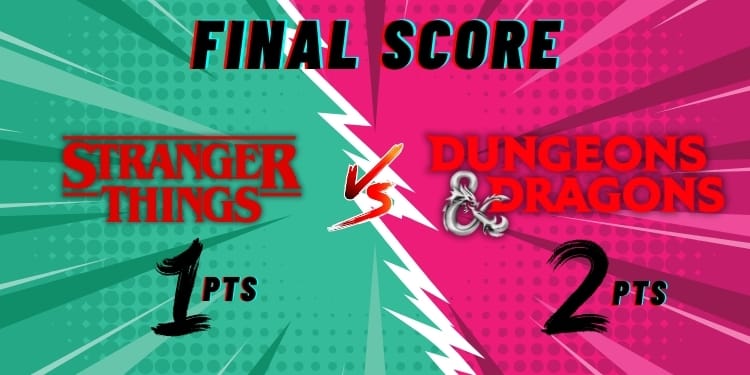
When we look at the scorecard, the tabletop originals take the series 2-1.
The D&D versions of Demogorgon and Vecna operate on a power scale that the show simply doesn’t reach, mostly because a TV show needs the heroes to have a fighting chance. If the kids had to fight the actual Prince of Demons, the show would be one episode long and end very badly.
The Stranger Things writers deserve credit, though. They didn’t just copy the monsters—they adapted the feeling of them. They captured the dread of facing something you don’t understand. They used the names as shorthand for the characters (and the audience) to grasp the stakes.
The beauty of both versions is how they inspire us.
Whether you're rolling dice in a basement or shouting at your TV while "Running Up That Hill" plays for the fiftieth time, these monsters do their job. They bring us together to root for the underdogs.
They remind us that even when the odds are impossible—when the villain is a literal god or a shadow monster—you stand your ground for your friends.
So, I'm turning it over to you.
Do you think I was too hard on Henry Creel? Is there a Stranger Things monster I missed that you think is tougher than its D&D inspiration?
Let me know in the comments below!
Hey fellow nerds! Before you dive back into that gaming session or start your next binge-watch, here’s the deal with Couch Soup: we’re a completely independent pop culture site run by genuine fans who get just as hyped as you do about the latest games, comics, movies, and TV shows. No corporate overlords, no AI-generated content, just real people who know their Metroid from their Mass Effect.
Unlike the big corporate sites, we don’t chase clicks or stir up drama. Sure, we might have some hot takes (looking at you, controversial season finale), but they come from a place of genuine passion and respect for the creators and fandoms we cover.
Want to support what we do and join what we think is the coolest community of pop culture enthusiasts on the internet? Check out our supporter tiers – each packed with perks that’ll level up your fandom experience. Every contribution helps keep us independent and lets us keep nerding out with you!
Thanks for being part of our quest – now, back to our regularly scheduled geekery!
Michael is an actor, writer, and a content creator, specializing in theatre and theme parks. He's currently the host of the YouTube channel Backstage Kingdom which deep dives into live entertainment in theme parks around the world. Michael also is a DM for the TTRPG actual-play channel "To Be Diced Adventures" on Twitch and YouTube.
Watch out, lovers of trashy American reality TV! There's a new show moving into the neighborhood, and it looks like a doozy... And I don't hate it. Wow! This looks like it's going to be extremely entertaining. What do you think?
The gangs (almost) back together again as we see Jessica Jones will have a major role in season 2 of Daredevil Born Again. Now all we need is Luke Cage and Danny Rand to come back. At this point, Disney has nothing to lose and just upside in going back to the good ol days […]
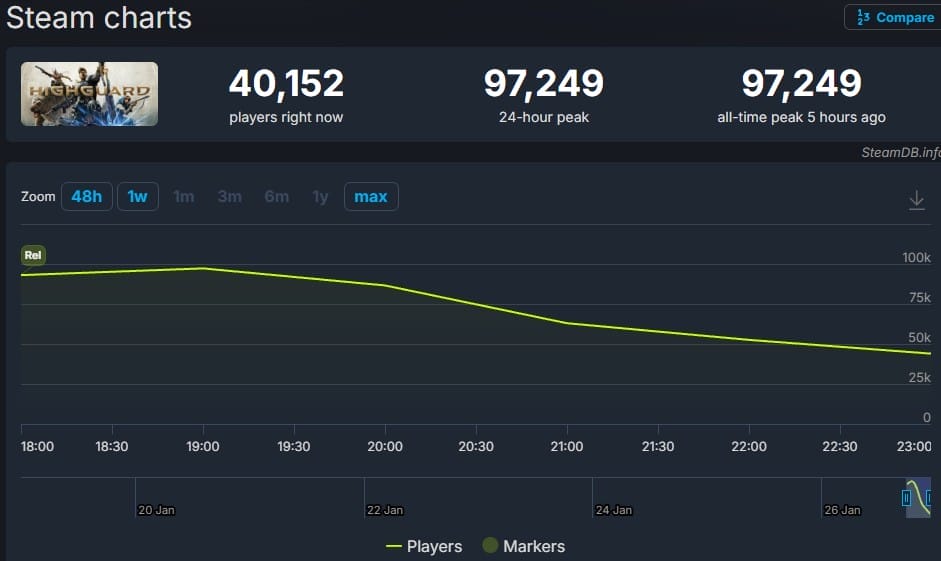
Almost 100k concurrents at launch but Geoff Keighley's "One More Thing" from last year's Game Awards is dipping fast with Mostly Negative reviews on Steam. How many are just annoyed idiots with 5-10 minutes of playtime is yet to be seen, but it's not helping the game's reputation.
Jason Momoa as Lobo in the new Supergirl movie has been revealed! It's gonna be interesting, for sure, to see if they explain away the alternate universe Aquaman of it all...
Hey, I loved Sinners. It was great. And I'm not being a hater here, but 16 seems a little excessive, right? Is this more because it qualifies for so many awards rather being the most exceptional at all of them? If Golden doesn't win Best Original Song, we riot.
Max Payne is a masterclass in character driven storytelling and I believe is a work of art. Its relevance today offers lessons that future titles can borrow.
Director Shinichirō Watanabe might be best known for Cowboy Bebop, but he's worked on a few other "road anime" that more than measure up to the 1998 legend.
Episode 6 of The Acolyte is here. Can this slower-paced episode keep the momentum from the action-packed Episode 5? Join Thomas Richards as he gives his thoughts on Episode 6 of The Acolyte, Teach/Corrupt.










I was waiting for an article like this to break down how the monsters compare. I could remember them very well from my childhood when we played.