It’s been 24 years since the classic British horror film, 28 Days Later, was released. The vehicle that made Cillian Murphy famous was Danny Boyle’s first in his rage-virus-induced nightmare-fuel franchise. First it was days, then weeks, and then years, with 28 Years Later coming out last year to a decisive, but predominantly positive reception.
But that’s not the whole story. Last year’s sequel is but the first in a trilogy set 28 years after the outbreak. It introduced us to Spike (Alfie Williams), a young boy trying to survive on his own after running away from the relative safety of his island home, leaving his father behind after helping his mother find peace in a different way. It was poignant and beautiful… and then it went batsh*t crazy at the end.
Picking up almost straight after the events of the last film, 28 Years Later: The Bone Temple continues Spike’s story, as well as some other threads from the previous installment. It’s once again written by Alex Garland, but this time it’s directed by Nia DaCosta. That’s right! No Danny Boyle in this one! But did this film miss his presence, or did it continue a remarkable legacy?
Story
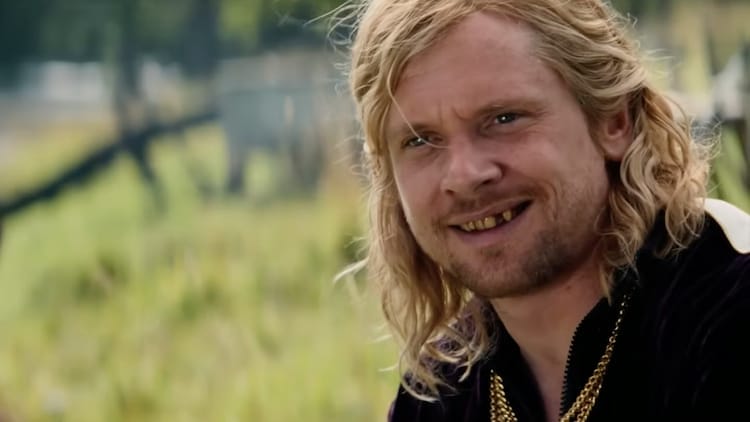
The Bone Temple revolves around two separate, but converging, narratives happening simultaneously in this f*cked up version of a quarantined Britain. On the one hand, Spike faces a struggle to survive after being taken in by Sir Jimmy Crystal’s (Jack O’Connell) psychotic gang of “Fingers”.
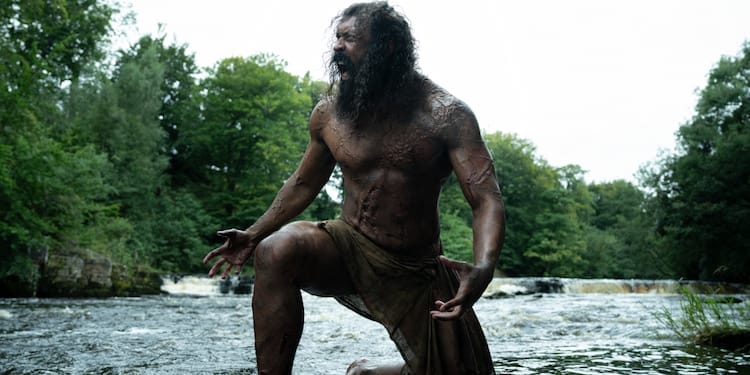
The other story is the ongoing burgeoning relationship between Dr. Kelson (Ralph Fiennes) and the infected Alpha, Samson (Chi Lewis-Parry). After realising that Samson is becoming less and less aggressive towards him following each dosing of his morphine dart, Kelson experiments to see whether there is any way the world can be healed.
These stories don’t interweave that much, but when they do, oh boy, you’re in for a treat.
The Horror
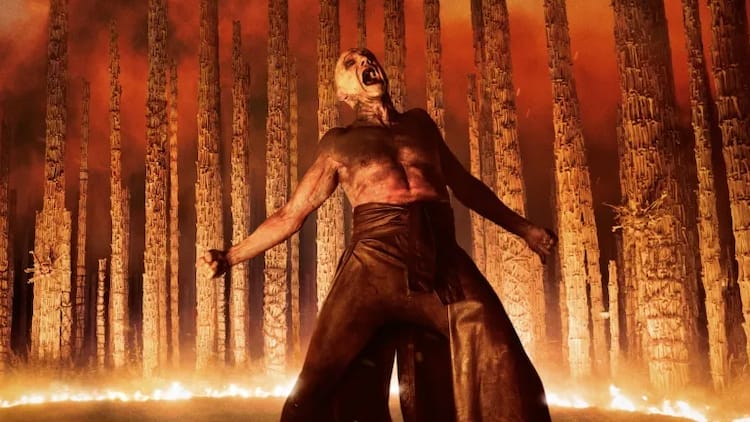
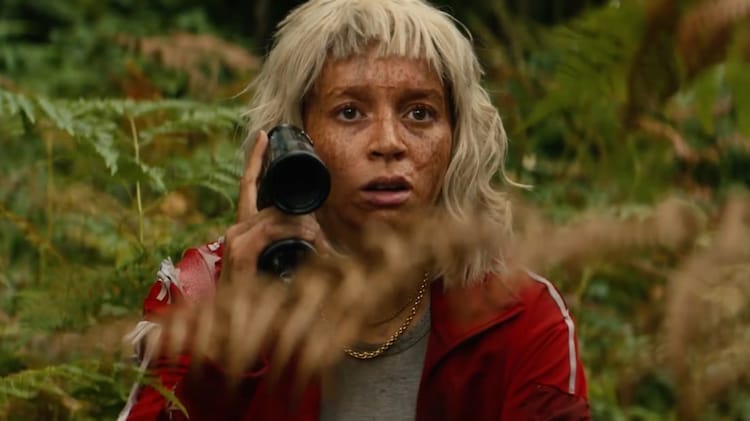
This is a Jimmy
One thing you could hold against The Bone Temple is its lack of zombie fun. I think this instalment has, setting expectations, the least amount of frantically frolicking undead folk. And, when they do turn up, aside from Samson, they don’t feel as dangerous as they used to. Maybe that’s because the survivors at this stage are more aware of, and know how to deal with, them. It could be because we’ve seen how badass the Alphas are, though.
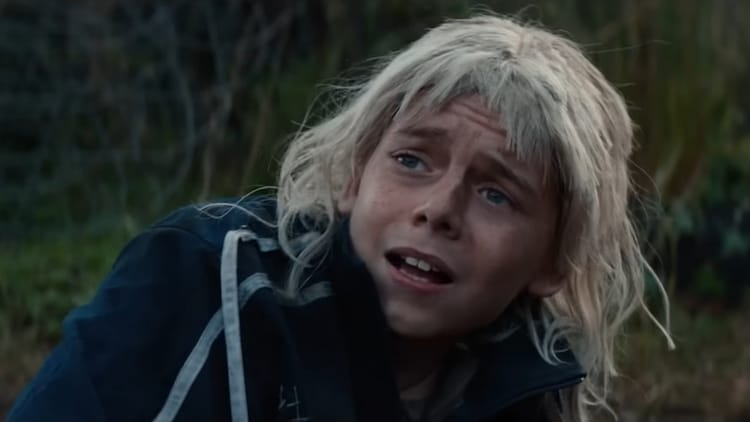
All of that doesn’t mean that there isn’t horror; it’s just mostly perpetrated by humans, and in particular, Sir Jimmy and his Fingers. Hell, the opening of this film is truly harrowing as Spike enters a fight to the death with one of the Jimmys, with the winner earning their place in the crew. The outcome of that death match was horrific to watch. Shoutout to Jack O’Connell because he brought the psychotic Sir Jimmy to life in an extremely terrifying way.
Hope and Hopelessness
…this is also a Jimmy…
Kelson and Sir Jimmy’s stories embody themes of hope and hopelessness perfectly.
The doctor, although world-weary and lonely, spends his days attempting to do the impossible - give relief to an infected in the hopes it will cure what ails him. He has optimism that, if nothing else, he can put some more good out into the world before he shuffles off his mortal coil. And, with the small but powerful steps he takes with Samson, he discovers a light that he thought he’d lost a long time ago. Don’t get me wrong, Kelson’s story is one fraught with pain and anguish, but as you saw in 28 Years Later, he hasn’t succumbed to becoming a monster.
Sir Jimmy sees the world as it is, leading to him becoming the monster he thought he needed to be and believing that he is the son of Lucifer himself. He kills, maims, and generally makes the world an even worse place. He instills a feeling of hopelessness in everyone around him. Spike, in particular, is nothing like he was in the previous film; a shadow of the brave yet naive boy who went on a journey with his sick mother to Kelson’s monument, abandoning the relative safety of his island home.
Kelson and Sir Jimmy are the perfect reflection of each other.
Style
This is Samson, covering up for once
Danny Boyle’s style in the original film and in 28 Years Later was gritty, grimy, and consistent. That is, the cinematography feels exactly the same in each film. The more recent movie looks like it could have been shot in the early 2000s, as if it were filmed with a shaky cam or an iPhone or something. That’s not a dig at its quality, though, because it’s definitely an intentional choice that pays off.
Although The Bone Temple is a direct continuation, the film seems much more clean and polished. Gone is that early 2000s sheen of the previous franchise entries, giving way to a much more modern feel. It’s a treat that I wasn’t expecting, and furthermore, I didn’t think I’d enjoy the updated visuals quite as much as I did. Maybe the standard infected (not Samson) looked a little worse than normal, but as I’ve already said, there aren’t actually that many in this film to be disappointed with.
Summary
AND this is a Jimmy!
By now you’ll have realised that I loved this film. 28 Years Later: The Bone Temple had me open-mouthed, tense, and riveted to the cinema screen from the horrific opening to the ending (which had me popping off, but I won’t spoil it here). It’s terrifically acted, poignant, and stylish in a modern-feeling way that, although may be out of whack with the previous entries, I really appreciated.
But it’s the story that gripped me more than anything. This film is about hope. It shows you what happens when you abandon all hope, and it shows you what can be achieved with a mere ounce. It allows you to believe that there’s a better way instead of giving in to the devil and making everything worse for everyone else.
The 28 series has never been better. Is it the best in the franchise? You’re DAMN RIGHT it is!
Hey fellow nerds! Before you dive back into that gaming session or start your next binge-watch, here’s the deal with Couch Soup: we’re a completely independent pop culture site run by genuine fans who get just as hyped as you do about the latest games, comics, movies, and TV shows. No corporate overlords, no AI-generated content, just real people who know their Metroid from their Mass Effect.
Unlike the big corporate sites, we don’t chase clicks or stir up drama. Sure, we might have some hot takes (looking at you, controversial season finale), but they come from a place of genuine passion and respect for the creators and fandoms we cover.
Want to support what we do and join what we think is the coolest community of pop culture enthusiasts on the internet? Check out our supporter tiers – each packed with perks that’ll level up your fandom experience. Every contribution helps keep us independent and lets us keep nerding out with you!
Thanks for being part of our quest – now, back to our regularly scheduled geekery!
A northerner from England, Iain is passionate about all things film, TV, and video games (he has an obsession with popping them trophies in PlayStation games). When not consuming pop culture, Iain can be found drawing on MS Paint, learning Mandarin, watching football (soccer), or at pub quizzes. Mostly the pub thing, although he actually has not drunk a drop of alcohol since a messy Christmas Eve over a decade ago...
Weirdly, going back to just Overwatch feels like it's bringing back the excitement for the hero shooter. I don't know about you guys, but I'm so interested in seeing what the Jetpack Cat plays like!
The full season 2 trailer dropped today, and it does not hold back on the Kaiju action. Also, it's good to see Kurt Russell in more of the prime action hero role vs the old man with love issues role he was slotted into in season 1. The trailer teases a Kong, Zilla, Tentacle Kaiju […]
Hmmmmm. I'm not sure about this, guys. Unless this is an alternate universe type of thing, I don't like Stranger Things having more intricate and special monsters in the off-screen times. Also, voice cast feels weird. I'm sure good. But weird.
The one man fighting force who has taken down small town cops to entire armies, and most recently, the cartel is back as an origin story titled "John Rambo". One reason to get excited is that this is being directed by the visceral director of Sisu, which means this will and should be a rated […]
28 Days Later: The Bone Temple is out in theaters just one year after the previous entry. But is the second film in Alex Garland’s trilogy the best installment yet? Iain gives you the scoop.
Guardians of the Galaxy Volume 3 is finally here, but is it any good? Join Thomas Richards as he gives his spoiler-free thoughts on the final chapter in this trilogy.
Blood Star, the highlight of Iain’s time at Grimmfest, is the road horror movie you should be watching this year. With a genuinely sadistic villain and a protagonist you can get behind, you should add this movie to your watch list. Let us tell you why.