Dispatch: A Tale-Told, 1 Million Sold.
Some of you may have seen Dispatch making a really big splash on the Steam store lately. It is a combination of a traditional police dispatch game, where you solve quirky citizens’ problems, and the intrigue and choice-based system of a Telltale game. Add in a sprinkle of Superheroes, and you've got yourself Dispatch.
Usually, I would find a hidden layer to a game's creation, but today, there is none. You've got yourself a very true-to-form, but expertly crafted, Superhero redemption experience. There's no real push to break the mold in this game, no political agenda, nor even any sort of new innovation. This is, without a doubt, the best use of the existing formula you would see in the modern day, except perhaps Telltale’s The Walking Dead, which the developers of this game also worked on, now working for Adhoc Studio.
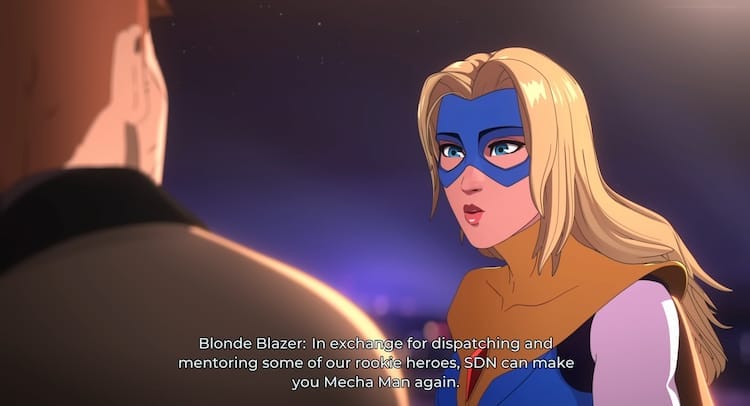
First, let's talk about the story, graphics and cutscenes. They're all very well animated, and the style is incredibly close to the show Invincible in its charm and fluid movements. The main character, Robert, resembles Iron Man in a lot of ways: he's a techy hero who uses a Mech suit his dad left him. Upon his suit being destroyed and becoming destitute, he begins to work for a superhero dispatching firm, working with a group of "reformed" villains, hoping to resolve their debt to society through hero work.
Characters will often give very authentic and adult reactions to situations and your choices, but they will also give in to childish humour when it's relevant to the character it applies to. For instance, the serious and larger-than-life character Blonde Blazer will never engage in tomfoolery, whilst the tomboyish and smart-talking Invisigal will always drag the conversation into the gutter somehow. Did I also mention that the voice acting in this game may as well be industry royalty? With the likes of Laura Bailey, Matt Mercer and Travis Willingham joining on the veteran VA side, and beloved celebrity figures such as Aaron Paul of Breaking Bad fame, Charles "MoistCr1TiKaL" White, Alanah Pearce, JackSepticEye of YouTube fame, and a musician called THOT SQUAD. You're pretty much spoiled when it comes to the performance levels of actors in Dispatch.

Within your group of fledgling ex-villains, the more you play, the more you come to understand and enjoy their company. Despite most of them having very deep flaws, the narrative does an incredible job of getting you to love and care for all of them. It's honestly amazing how likable this cast is, and I don't know whether it was the writing or the godlike voice performances, but there was not a single character in the gang of heroes that I got sick of.
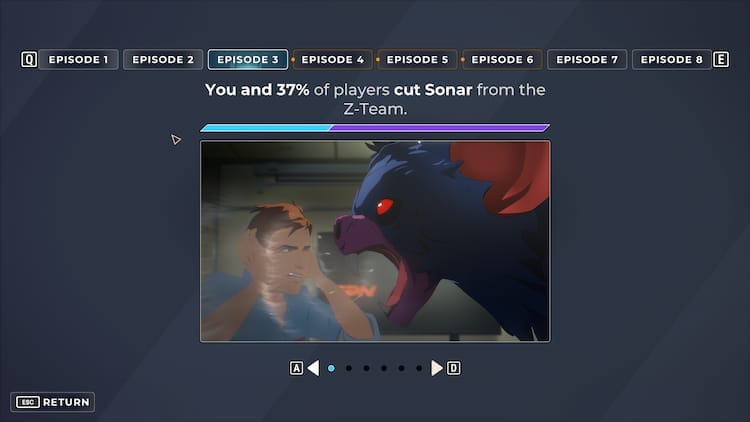
That is kind of brutal when you consider that our choices can lead to different characters still being around to participate in the story or not. This is a game of choices with real consequences, and, much like in Telltale games, you get to compare exactly what you've done against others playing at the same time as you. It's a great tool for reflection and to know whether you're thinking the same way as the majority, or the 6% of people who made a rare choice in the narrative.
Special mention to your best friend Royd in the game, who looks very similar to Maui from Moana. He turns out to be the science guy, but I frequently thought, "Why can't I have this guy on my team," especially with how the relationship between him and the main guy, Robert, blossoms. They have a real shared interest in heroics and helping the team to grow into their best selves.
Gameplay is where the fun really begins. You have to decide where your heroes should go and help them through common sense reasoning. For example, Malevola, a portal-creating demon woman, cannot be sent to churches or religious places, but is really good at scaring children into behaving, while your bat friend Sonar is an accomplished grifter and businessman, so he would be a good choice to send on diplomatic missions and to deal with politicians.
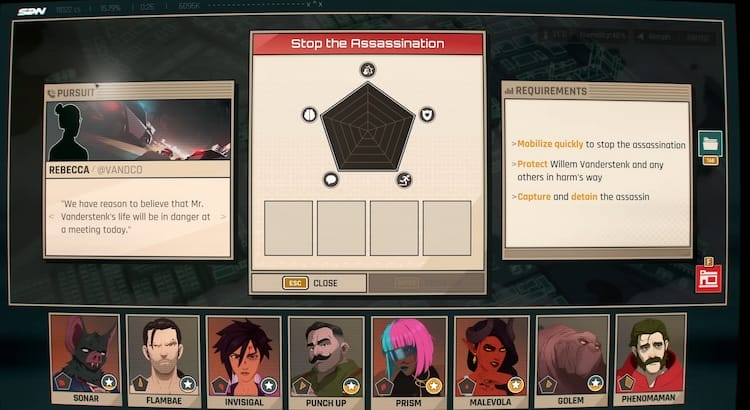
Every Hero has traits and skills you can develop that can help in a variety of situations, and it was a true joy to work out who fits best in each puzzle. It took a little while to realise that your Firebender, who was previously an arsonist, might actually be the best fit to put fires out, due to his pyrokinetic abilities going both ways. It was a great experience to really get to know these heroes both socially and the depths of their power sets, and I'm sure if I did a second playthrough, my knowledge would greatly benefit me in making the right choices next time.

Next, let's talk about how your experience can be customized. Throughout the cutscenes, you have the opportunity to engage with quick-time events. This turns your viewing experience into more of a video game, pressing prompts and sliding buttons during the narrative to make you feel like you're controlling Robert’s Mecha suit or his civilian form. Or you can choose to leave them turned off. This removes the ability for you to see funny fails should you decide Robert actually isn't a good superhero and deliberately fail the prompts, but this generally only results in him being saved by another character or, in rare cases, watching him get beaten up. I like that you can tailor your game like this. It lets the more impulsive player have something to do, whilst the more story-driven player can sit back and enjoy.
The one part I was not as much in love with was the hacking mini-game. You sort of just roll a ball around a cyber grid and try to get to the access point to trigger various electronics in the real world, but it got kind of ridiculous at points. I don't really understand how someone on a very low-grade PC can hack the sprinklers at a donut shop. It just didn't make much sense and felt like an attempt to make Robert more integral, but I was enjoying the dispatching aspect far more. More to the point, your success in the story may depend on you successfully hacking to aid your team, which means that if you don't like this sort of gameplay, you may just have to put up with it, despite your enjoyment possibly being non-existent.

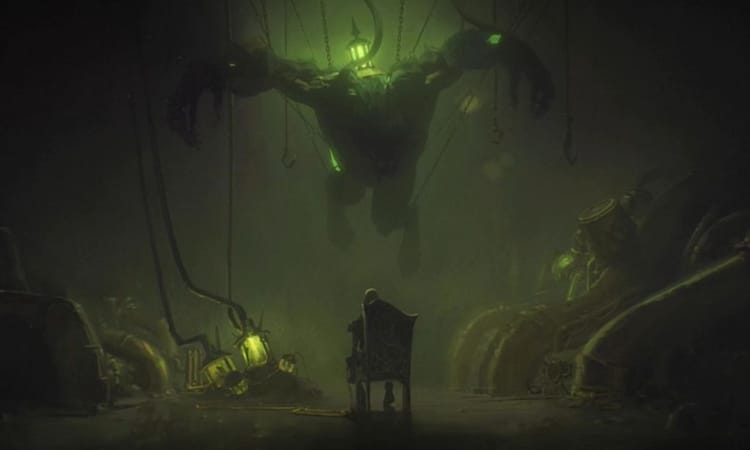
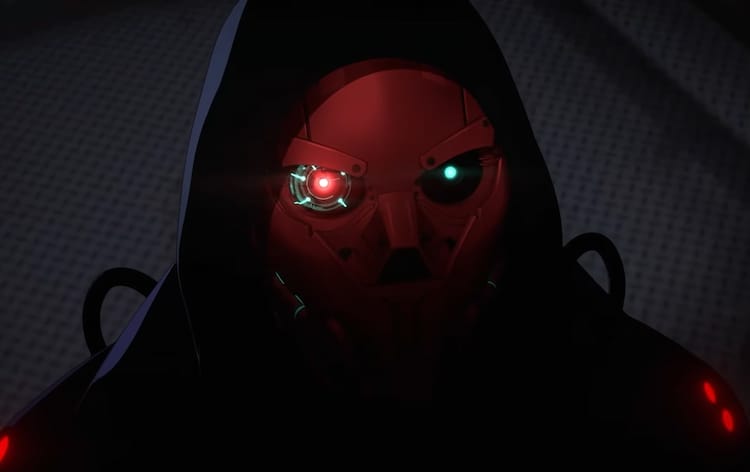
Finally, let's talk about the game's antagonists. Something the writers did which I absolutely loved, was that Shroud, the game's main villain, is an expert at predicting people. This means he can see and adapt to your decisions in-game. Whenever you make a decision, you can guarantee that Shroud has an answer for it. Only your previous actions and teammates can help you deal with him, and it's quite satisfying to try to play against this guy who is treating your decision-making as his personal manipulation game. He's a very fitting villain for a choice-based game like this, and I really enjoyed his aura of "I’m ten steps ahead of you". It's the cherry on top of an already stellar game, and it helps that he's voiced by Critical Role legend Matt Mercer.
So there we have it. Dispatch is to me the best narrative-driven game to come out since Telltale’s The Walking Dead, and I would highly recommend anyone interested in games like this to try it out, even if you don't particularly like superhero stories. It's definitely worth it.
I give Dispatch a Solid 9.5/10